world war 2 questions and answers pdf
World War II Q&A PDFs compile concise quizzes, like a 4‑page set of 20 questions for students, with separate answer sheets for teachers. They cover topics from island‑hopping tactics to code‑breaking successes, offering quick reference for classrooms and history buffs. Ideal for exams, learning online!
Historical Significance of WWII Questionnaires
World War II questionnaires serve as compact gateways to the era’s complex narratives, translating vast archival material into bite‑size, answerable formats. By framing events—such as the U.S. loss at the Battle of the Bulge, the Japanese halt at Port Moresby, or the strategic island‑hopping campaign—into clear questions, they distill lessons that resonate with students and researchers alike. The inclusion of code‑breaking scenarios, where Allied signals remained unreadable to Japanese forces, underscores the technological edge that shifted naval dominance. Moreover, these PDFs capture the dual perspectives of Allied and Axis leaders, offering balanced viewpoints that challenge simplistic hero‑villain dichotomies. Their structured Q&A layout facilitates rapid review, making them ideal for classroom drills, self‑study, or exam preparation. Beyond education, they preserve collective memory!! In an age of digital overload, the concise, searchable nature of PDFs ensures that critical WWII details remain accessible, fostering informed citizenship and preventing historical amnesia. Thus, WWII questionnaires are not merely study aids; they are living archives that keep the lessons of the past alive for future generations. By integrating primary source excerpts, statistical data, and reflective prompts, these PDFs turn recall into analysis letting learners question causality, spot bias, and grasp the complex human story of the war in depth now
Popular PDF Formats for WWII Q&A
World War II Q&A PDFs appear in several popular formats that balance readability, interactivity, and archival stability. The most common is the standard PDF, a 4‑page document containing 20 questions, ten per page, with a separate answer sheet for teachers. This layout, used by many school‑library collections, keeps the text crisp and printable while preserving layout fidelity across devices. Interactive PDFs add form fields so students can type or check answers directly, enabling instant feedback when paired with JavaScript or PDF‑form logic. Some institutions embed hyperlinks to primary‑source images, allowing learners to click on a battle map or a code‑breaking diagram and view the original document. For long‑term preservation, PDF/A‑1b is often chosen; it locks fonts and metadata to prevent future rendering issues. Finally, some archives offer PDF‑X, a variant that supports embedded multimedia, such as short audio clips of wartime speeches or video snippets of key battles, enhancing engagement. Each format serves a distinct educational need, from quick printouts to interactive study tools and archival preservation.
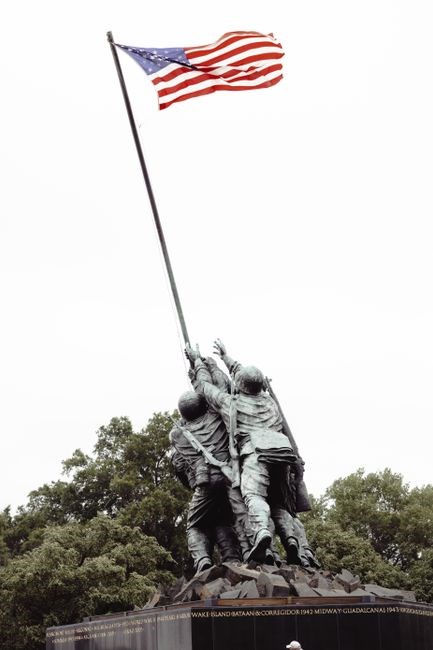
In addition, many educators convert PDFs into interactive books, embedding quizzes that auto‑grade. PDF‑X3 supports embedded 3D models of aircraft or maps, allowing students to examine details. Others integrate QR codes linking to archival footage, enriching the learning experience and bridging the gap between static text and dynamic media. Interactive. Now.
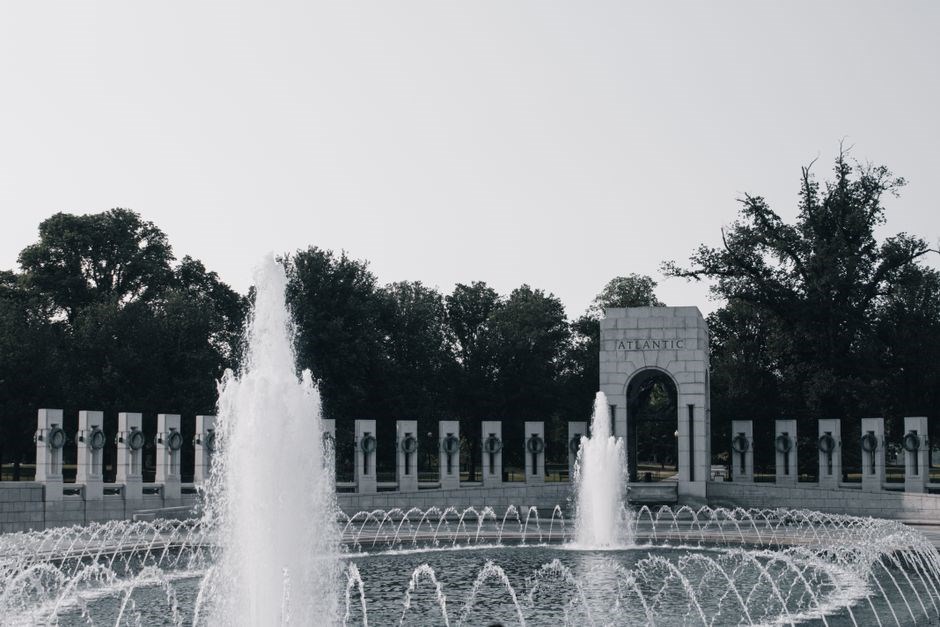
Common Question Categories in WWII PDFs
World War II Q&A PDFs typically organize questions into thematic clusters that mirror the war’s multifaceted narrative. The most frequent category is Major Battles, where learners identify dates, locations, and outcomes of pivotal engagements such as Stalingrad, Midway, and Normandy. Political Leadership questions probe the decisions of figures like Churchill, Roosevelt, and Hitler, asking students to link policy choices to battlefield results. Technology and Innovation tests cover code‑breaking breakthroughs, the development of radar, and the introduction of jet aircraft, highlighting how technical advances shifted the balance of power. Strategic Concepts such as island‑hopping, Blitzkrieg, and the Manhattan Project are examined through scenario‑based queries that assess comprehension of doctrine and its execution. Social Cultural Impact questions ask about civilian experiences, propaganda techniques the role of women in the workforce, encouraging reflection on the war’s broader societal effects. Finally, Post‑War Consequences prompts students to analyze the formation of the United Nations, the onset of the Cold War, and the reconstruction of Europe, tying lessons learned to contemporary geopolitics. Many PDFs also include a “Key Terms” section that defines essential vocabulary, helping students build a foundation and tackling the questions. Some collections feature “Primary Source Analysis” categories, where students read excerpts from diaries, speeches, or telegrams and answer questions that test their ability to interpret historical documents. Assessment Reflection categories invite learners to evaluate their understanding, write essays, participate in discussion prompts that deepen critical thinking.
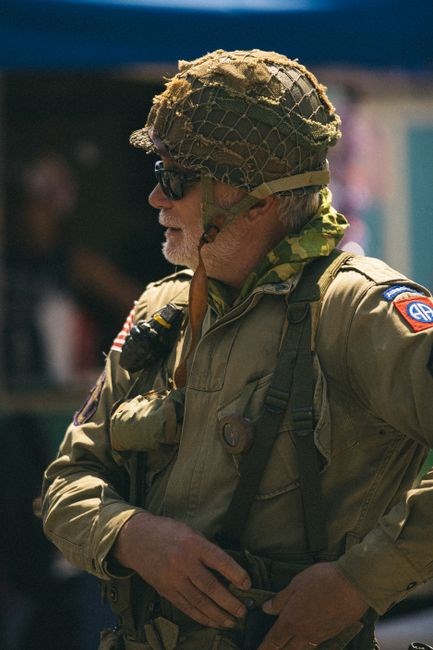
Authoritative Sources for WWII Q&A Content
Reliable WWII Q&A PDFs rely on vetted primary and secondary sources. National archives such as the U.S. National Archives and Records Administration (NARA) and the UK National Archives provide de‑classified documents, battle reports, and diplomatic cables that form the factual backbone of quiz questions. Academic institutions—Harvard, Oxford, and the University of Cambridge—publish peer‑reviewed journals and monographs that contextualize strategic decisions and technological innovations. Official military histories, like the U.S. Army’s “United States Army in World War II” series and the British “Official History of the War” volumes, offer authoritative narratives that are frequently cited. Museums and memorial sites, including the Imperial War Museum and the National WWII Museum, curate curated exhibits and oral histories that enrich content with personal perspectives. Digital repositories such as JSTOR, Project MUSE, and the Digital Public Library of America host scholarly articles and digitized primary sources, ensuring accessibility and academic rigor. Finally, reputable online platforms—BBC History, History.com, and the Smithsonian’s “World War II” portal—provide fact‑checked articles and interactive timelines that supplement textbook material. By triangulating data from these sources, content creators achieve accuracy, depth, and a balanced representation of Allied and Axis viewpoints, thereby enhancing the educational value of each PDF. These PDFs are key tools for learning day
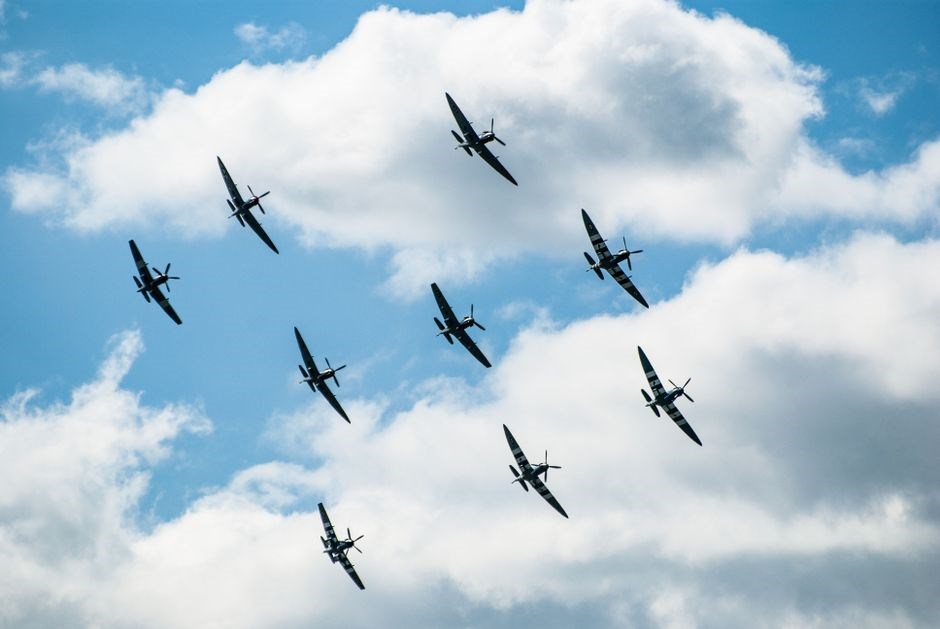
Educational Applications of WWII Q&A PDFs
World War II Q&A PDFs serve as versatile tools across K‑12, higher education, and lifelong learning. In classrooms, teachers embed quizzes into lesson plans, using answer sheets for formative assessment and instant feedback. Students can self‑test before exams, reinforcing retention of dates, battles, and key figures. In colleges, professors integrate PDFs into digital learning platforms, allowing asynchronous review and peer discussion. The concise question format supports active recall, a proven strategy for deep learning. For history clubs and study groups, PDFs facilitate collaborative study sessions, prompting debate over strategic decisions and ethical dilemmas. Libraries use them as supplemental reading, linking PDFs to primary source archives for research projects. Online courses and MOOCs incorporate PDFs into modules, offering downloadable practice sets that complement video lectures. Adult education centers employ PDFs to verify personal narratives, cross‑checking dates and events. Across all settings, the format’s portability, low cost, and ease of distribution make WWII Q&A PDFs an indispensable resource for fostering critical thinking, contextual understanding, and historical empathy. Teachers can adapt these PDFs into interactive quizzes by embedding hyperlinks to primary source documents, allowing students to verify claims and explore multiple perspectives, thereby enhancing critical analysis skills and encouraging a deeper appreciation for the complexities of global conflict and encouraging collaborative learningtoday!
Best Practices for Creating WWII Q&A PDFs
When designing World War II question‑answer PDFs, start with a clear learning objective: whether to test factual recall, analytical reasoning, or source evaluation. Structure each page with a consistent layout—question number, multiple‑choice or short‑answer format, and a dedicated answer key on a separate sheet. Use authoritative sources such as the National Archives, Smithsonian collections, and peer‑reviewed journals to ensure accuracy. Cite each fact inline or in a bibliography to promote scholarly integrity. Incorporate visual aids like maps, battle diagrams, and primary‑document excerpts; embed them as high‑resolution images to aid spatial reasoning. Keep language age‑appropriate, avoiding jargon unless explained. For accessibility, include alt text for images and use a readable font size (≥12pt). Test the PDF on different devices to confirm that hyperlinks, bookmarks, and interactive fields function correctly. Finally, solicit feedback from educators and students, iterate on question difficulty, and update content annually to reflect new research or historiographical debates. By following these steps, creators produce engaging, reliable, and pedagogically sound WWII Q&A resources that support diverse learning styles and assessment needs. Educators can also link PDFs to interactive timelines, enabling students to visualize the rapid escalation of conflict and the interconnectedness of global events; Such resources empower learners to assess documents more and develop nuanced perspectives on wartime decisions.!!! !
Where to Find Free WWII Q&A PDFs
Explore public domain archives like the National Archives, Project Gutenberg, and educational sites such as Khan Academy. Free PDF collections are also available on university repositories, Google Books, and specialized history portals. Download, share, and study. All PDFs are royalty‑free for teaching.
4.1 WWII Timeline Overview
World War II spanned from September 1, 1939, when Germany invaded Poland, to September 2, 1945, when Japan formally surrendered. The conflict unfolded in distinct phases: the Blitzkrieg in Europe (1939‑1941) saw rapid German advances; the Battle of Britain (1940) halted a German invasion; the Eastern Front erupted with Operation Barbarossa (June 1941), pushing Soviet forces back before turning. In the Pacific, the attack on Pearl Harbor (December 7, 1941) brought the United States into war, leading to island‑hopping campaigns across the South Pacific. 1942‑1943 marked turning points: Stalingrad (1942‑1943) ended German momentum on the Eastern Front, while Guadalcanal (1942‑1943) halted Japanese expansion. 1944 witnessed the Allied invasion of Normandy (D‑Day, June 6, 1944) and the liberation of Paris. 1945 began with the Soviet assault on Berlin (April 1945) and the dropping of atomic bombs on Hiroshima and Nagasaki (August 1945), culminating in Japan’s surrender. The war’s end reshaped global politics, leading to the United Nations and the Cold War. The Yalta Conference (February 1945) set post‑war Europe; the Potsdam Conference (July 1945) finalized terms; the Nuremberg Trials (1945‑1946) prosecuted war criminals. The Battle of the Atlantic (1939‑1945) and the Allied invasion of Italy (1943) were pivotal in the Mediterranean theatre, while the Tehran Conference (1943) forged the Allied strategic alliance. These milestones collectively chart the rise, apex, and conclusion of the global conflict, providing a concise framework for study and remembrance.
4.2 Key Battles Covered
World War II Q&A PDFs highlight pivotal engagements that shaped the conflict’s outcome. The set includes the Battle of Britain (1940), where the RAF defended the UK against Luftwaffe onslaughts, preserving the home front. It covers the Battle of Midway (1942), a decisive naval clash that turned the Pacific tide by crippling the Japanese carrier force. The Battle of El Alamein (1942) illustrates the Allied breakthrough in North Africa that halted Rommel’s advance. The Battle of Kursk (1943), the largest armored confrontation, demonstrates the Soviet counter‑offensive that stalled German momentum. The set also lists the Battle of the Bulge (1944), the last major German offensive on the Western Front, and the Battle of Normandy (1944), the amphibious invasion that opened a second front in Europe. Finally, the Battle of Berlin (1945) marks the final assault on the German capital and the collapse of the Nazi regime. Each entry pairs concise questions and answers that test knowledge of dates, commanders, and strategic significance, making the PDF an effective study aid for students and history enthusiasts alike. It also offers quick reference charts for
- Battle of Leyte Gulf (1944) – largest naval engagement in history, securing Philippine liberation.
- Battle of Iwo Jima (1945) – critical island capture that provided airfields for bombers.
- Battle of Okinawa (1945) – costly amphibious assault that brought Japan within striking distance.
- Battle of Leningrad (1941‑1944) – prolonged siege demonstrating Soviet resilience.
4.3 Political Leaders Highlighted
World War II Q&A PDFs feature a curated roster of key political figures whose decisions steered the global conflict. The set includes Adolf Hitler, the German dictator whose aggressive expansionism triggered the war; Winston Churchill, the British Prime Minister whose wartime speeches galvanized Allied resolve; Franklin D. Roosevelt, the U.S. President who led the American war effort and shaped the post‑war order; Joseph Stalin, the Soviet leader who commanded the Eastern Front and negotiated the Yalta accords; Benito Mussolini, the Italian fascist whose alliance with Germany altered Mediterranean dynamics; Emperor Hirohito, whose role in Japan’s war strategy remains debated; Charles de Gaulle, the French leader who rallied Free France; and Chiang Kai‑shek, the Chinese Nationalist head who coordinated with Allies against Japan. Each profile is paired with concise Q&A that tests knowledge of dates, policies, and diplomatic maneuvers, enabling students to assess how leadership influenced strategy and outcomes.
Additional leaders such as King Haile Sewall, who led Ethiopia’s resistance; President Harry S. Truman, who authorized the atomic bomb; Marshal Georgy K. Krasnyshev, who oversaw Soviet logistics; and Prime Minister Neville Churchill’s wartime coalition partners are also examined. The PDF includes concise Q&A on their policies, speeches, and diplomatic actions, offering a comprehensive view of leadership dynamics across all theaters of war. It also highlights the interplay between domestic politics and global decisions.
World War II Q&A PDFs highlight pivotal tech breakthroughs that reshaped combat and strategy. The set covers the Enigma‑breaking effort, where Allied code‑breakers at Bletchley Park decoded German cipher traffic, shortening the war. It also details the first operational jet fighter, the German Messerschmitt Me 262, and the Allied development of the turbojet engine that later powered the Gloster Javelin. Radar technology is examined, noting the British Chain Home system that detected incoming Luftwaffe raids and the U.S. SCR‑270 radar that warned of the Pearl Harbor attack. The PDFs include the atomic bomb, describing the Manhattan Project’s creation of the “Little Boy” and “Fat Man” devices that ended the war in the Pacific. Submarines and snorkel technology are also highlighted, illustrating how German U‑boats used snorkels to run diesel engines while submerged, extending their operational range. Additionally, the set covers the development of the first true guided missile, the German V‑2 rocket, and the Allied counter‑measures, as well as the use of the Q‑code system for radio communication. Each innovation is paired with concise Q&A that tests knowledge of dates, impact, and legacy, enabling students to assess how technology influenced tactics and outcomes. The PDFs also examine the evolution of electronic warfare, detailing how the Allies’ use of the SIGINT network intercepted German transmissions, and how the introduction of the first electronic counter‑measure pods on Allied aircraft disrupted enemy radar, thereby reducing losses over the Eastern Front. Furthermore, the collection includes a detailed analysis of the V‑2 rocket’s guidance system, the first use of a liquid‑fuel propulsion in a battlefield context, and the development that led to the firstUS anti‑missile radar arrays, illustrating how technological superiority became a decisive factor in the final phases of the war. Students gain deep insight!!
4.5 Cultural and Social Impact
World War II Q&A PDFs serve as a bridge between battlefield history and everyday life, illustrating how the conflict reshaped cultural norms, social structures, and collective memory. By presenting concise questions and answers, these documents highlight the war’s influence on art, literature, and cinema, showcasing iconic works such as “The Great Dictator” and “Casablanca” that reflected contemporary anxieties and hopes. They also explore how wartime propaganda shaped public perception, with posters and radio broadcasts reinforcing national identity and encouraging civic participation. The PDFs address the role of women, noting how the war accelerated the entry of women into the workforce, leading to new gender roles and the eventual push for equal rights. They examine the migration of refugees, the internment of Japanese Americans, and the rise of civil rights movements, underscoring the social upheaval that followed the conflict. Additionally, the materials discuss the emergence of youth culture, the spread of jazz and swing, and the way music became a form of resistance and solidarity. The Q&A format encourages critical thinking about how cultural artifacts both reflected and influenced public sentiment, and how postwar societies negotiated trauma, remembrance, and identity. By engaging learners with targeted questions, these PDFs foster a deeper appreciation of the war’s lasting imprint on everyday life and cultural expression. This concise format invites reflection on the war’s legacy.!!
4.6 Allied vs Axis Perspectives
World War II Q&A PDFs present balanced viewpoints by juxtaposing Allied and Axis narratives. Questions probe the motivations behind Germany’s Blitzkrieg, Japan’s expansionist doctrine, and the United States’ strategic island‑hopping campaign. Answers reference primary sources such as the Nuremberg Trials, Japanese surrender documents, and Allied intelligence reports, offering students a nuanced understanding of each side’s objectives. The PDFs highlight how propaganda shaped public opinion: Nazi rallies, Axis radio broadcasts, and Allied leaflet drops that encouraged resistance. They also examine the moral dilemmas of war, including the Holocaust, the use of atomic bombs, and civilian casualties. By contrasting the Allies’ emphasis on collective security with the Axis pursuit of territorial dominance, learners grasp the differing ideologies that fueled the conflict. The format encourages critical analysis of primary documents, fostering empathy and historical literacy. In addition, the Q&A sets include comparative questions on technology, such as the development of radar versus the German V‑2 rocket, illustrating how each side leveraged science to gain advantage. This dual‑perspective approach equips readers to evaluate the complex legacy of World War II from both fronts, promoting informed discussion and deeper insight into the war’s enduring impact.
Students can use these PDFs to compare primary documents, assess bias, develop critical thinking about wartime narratives to kids
4.7 Post-War Consequences Discussed
World War II Q&A PDFs explore the aftermath of the conflict by presenting questions that cover the establishment of the United Nations, the onset of the Cold War, the Marshall Plan, and the decolonization wave that reshaped former colonies. They ask how the Nuremberg Trials influenced international law, what role the Potsdam Conference played in dividing Germany, and how the Korean and Vietnam wars emerged from unresolved tensions. The PDFs also examine the economic reconstruction of Europe, the shift to a bipolar world order, and the rise of new superpowers. By comparing primary documents such as the UN Charter, the Marshall Plan memorandum, and decolonization speeches, students can analyze how war crimes accountability and reparations shaped global norms. Questions also cover the impact on civilian populations, the migration of millions, and the cultural memory preserved in museums and memorials. These resources encourage critical reflection on how the war’s legacy influenced political boundaries, economic policies, and social movements worldwide, providing a comprehensive view of post-war consequences.
These PDFs provide interactive links to archival footage, audio transcripts, and maps. Engaging with multimedia helps learners contextualize dates, analyze strategic decisions, and reflect on war’s human cost. The resources support differentiated instruction, enabling teachers to tailor difficulty and cross‑disciplinary connections. Great learning.!